Insulated Casseroles · 21 Aug 2026
What Is an Insulated Casserole and How Does It Work?
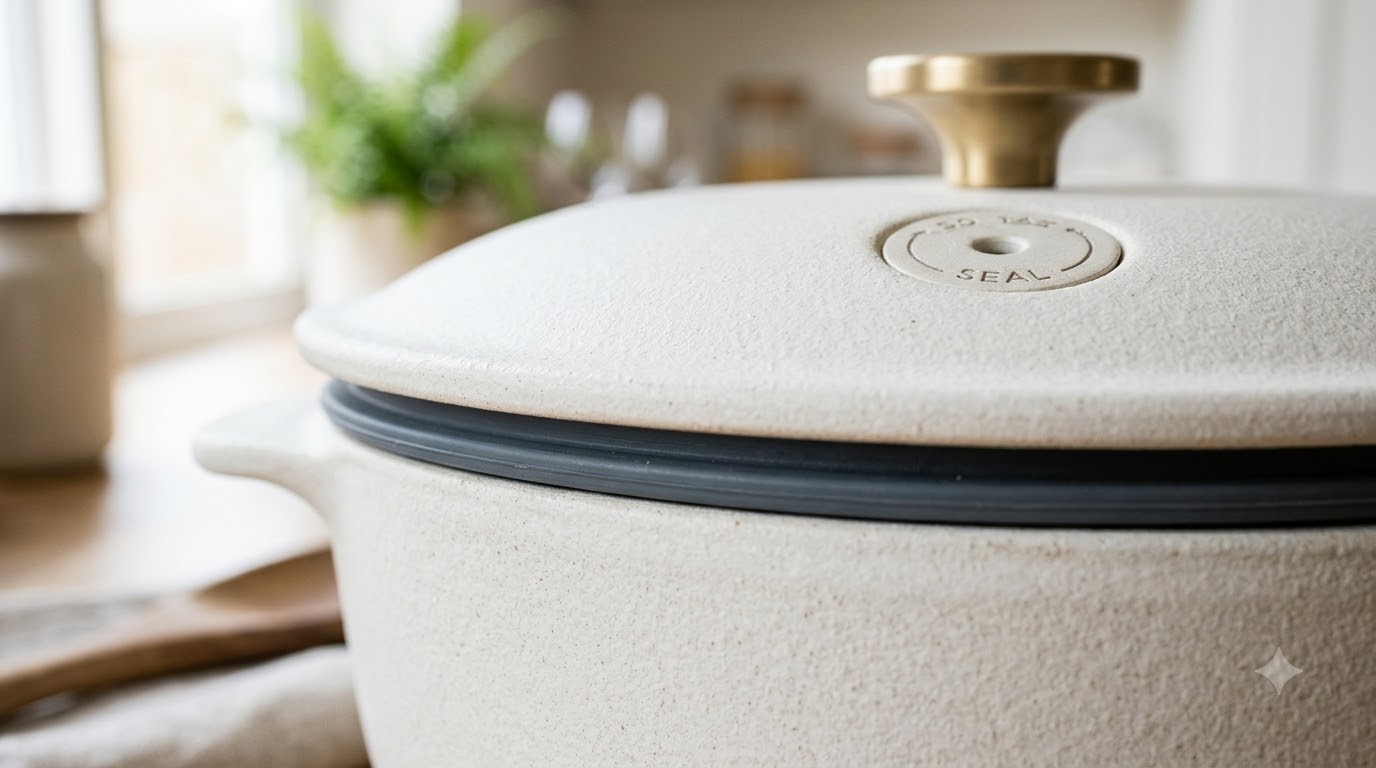
An insulated casserole is a food-storage and serving container designed to reduce the rate of heat transfer from cooked food to the surrounding environment. Its insulated construction helps food remain warm for longer than it would in an ordinary non-insulated container.
The basic principle is straightforward: instead of allowing heat to move rapidly from the hot food to the cooler surroundings, the casserole uses its walls, insulation system and lid to slow that heat transfer.
Understanding how an insulated casserole works helps buyers, retailers, product designers and kitchenware businesses evaluate different product constructions more accurately.
What Is an Insulated Casserole?
An insulated casserole is a type of thermoware designed primarily for storing and serving prepared food while reducing heat loss.
It generally consists of:
An inner food-holding compartment
An insulating structure
An external body
A lid
Supporting components such as handles or a base
Depending on the design, the inner and outer components may be made from plastic, stainless steel or a combination of materials.
Insulated casseroles are commonly used for foods such as:
Rice
Roti and chapati
Curries
Vegetables
Pasta
Cooked grains
Other prepared foods
The product is particularly useful when food needs to be kept warm between cooking and serving.
How Does an Insulated Casserole Work?
The working principle is based on reducing heat transfer.
When hot food is placed inside an insulated casserole, heat naturally tends to move toward the cooler external environment. The casserole's construction slows this process.
Three major heat-transfer mechanisms are relevant:
Conduction
Conduction is heat transfer through a material.
If the walls of a container provide a direct path for heat to travel outward, heat can move relatively quickly from the food to the external surface.
Insulation reduces this direct heat-transfer pathway.
Convection
Convection involves the movement of fluids or gases caused by temperature differences.
The design of an insulated casserole can reduce convective heat movement around the food compartment by incorporating suitable wall structures and insulation.
Radiation
Objects also transfer thermal energy through radiation.
The materials, surfaces and geometry of the casserole influence this component of heat transfer, although the overall performance of a product depends on the complete construction rather than one feature alone.
The Overall Principle
An insulated casserole does not make heat disappear or permanently preserve the original temperature.
Instead, it reduces the rate at which thermal energy leaves the food.
That is why the food gradually cools over time rather than remaining at its original cooking temperature indefinitely.
What Are the Main Parts of an Insulated Casserole?
Although designs vary, most insulated casseroles can be understood through a few basic components.
Inner Container
This is the part that holds the food.
Its material and surface characteristics are important because it comes directly into contact with the contents.
Insulation Layer
The insulation creates a thermal barrier between the inner food compartment and the external body.
This is one of the defining characteristics of an insulated casserole.
Outer Body
The external body protects the internal structure and contributes to:
Product strength
Appearance
Handling
Structural stability
Lid
The lid covers the opening and helps reduce heat exchange with the surrounding environment.
A poorly fitted lid can reduce the overall effectiveness of the product.
Base
The base provides stability and supports the container.
In some designs, it may also contribute to the product's thermal construction.
What Materials Are Used in Insulated Casseroles?
Insulated casseroles can use different material combinations.
Plastic
Plastic is commonly used for outer bodies and lids because it can be moulded into a wide range of shapes and designs.
Potential advantages include:
Low weight
Design flexibility
Colour options
Easy moulding
Attractive surface finishes
The specific polymer and its properties depend on the manufacturer's product specification.
Stainless Steel
Stainless steel can be used for inner containers or other components.
It may be selected for applications where buyers prioritize:
Durability
Structural strength
Premium positioning
A metal food-contact surface
The exact steel grade and construction should be verified for each product.
Combination Construction
Some insulated casseroles combine plastic and stainless-steel components.
For example, a product may use a metal inner container with a plastic outer body.
This allows manufacturers to combine different material properties within one product.
Insulating Material
The insulation system varies according to the product.
Some commercial thermoware constructions use polyurethane insulation, while other designs use different insulating structures.
Therefore, the term "insulated casserole" should not be interpreted as meaning that every product uses the same insulation material.
What Is the Role of the Insulation Layer?
The insulation layer acts as a barrier that slows the movement of thermal energy.
Consider a simple example.
A container filled with hot food is surrounded by cooler air. Without effective insulation, heat can move relatively quickly through the container wall.
When an insulating layer is incorporated into the construction, the path for heat transfer becomes more resistant.
As a result:
Hot food → inner container → insulation system → outer body → surrounding environment
The insulation helps reduce the rate at which energy travels along this pathway.
The effectiveness depends on the complete construction, including the insulation material, thickness, continuity, wall design and assembly.
Does the Lid Help Keep Food Warm?
Yes. The lid is an important component of an insulated casserole.
The opening of the container is naturally one of the areas where heat can escape. A properly designed lid helps reduce this heat exchange.
A good lid should provide:
Appropriate fit
Stable dimensions
Easy opening and closing
Adequate coverage
Suitable durability
The lid cannot completely stop heat transfer, but its design can influence the overall thermal performance of the casserole.
What Factors Affect Heat Retention?
The heat-retention performance of an insulated casserole depends on more than the insulation material.
Starting Temperature
Food placed into the casserole while very hot starts with more thermal energy than food that has already cooled.
Quantity of Food
The amount of food inside the casserole affects its thermal behaviour.
Capacity and Geometry
Different shapes and sizes have different relationships between food volume and exposed surface area.
Insulation
The insulation material and construction affect the rate of heat transfer.
Lid
A well-fitting lid can help reduce heat loss.
Ambient Temperature
A casserole used in a cold environment experiences different heat-transfer conditions from one used in a warmer environment.
Opening Frequency
Opening the casserole repeatedly allows heat to escape and cooler air to enter.
Food Type
Different foods have different thermal properties, moisture levels and densities, which can influence how their temperature changes over time.
How Long Does an Insulated Casserole Keep Food Warm?
There is no single universal heat-retention time for all insulated casseroles.
Performance varies according to:
Product construction
Insulation
Capacity
Starting food temperature
Quantity of food
Ambient temperature
Lid design
Opening frequency
Food characteristics
Therefore, statements such as "keeps food hot for X hours" should always be considered in the context of the test conditions.
For accurate product comparison, two casseroles should ideally be evaluated using the same testing conditions.
How Is an Insulated Casserole Different From a Regular Container?
The main difference is the thermal construction.
The actual performance depends on the individual product design.
Insulated Casserole vs Thermos: What Is the Difference?
Both products use thermal insulation, but their applications and designs are different.
A thermos or vacuum flask is generally designed for liquids such as:
Water
Tea
Coffee
Other beverages
An insulated casserole is primarily designed for solid or semi-solid foods.
Its opening, internal geometry and lid design are therefore optimized for food storage and serving rather than beverage dispensing.
What Foods Can Be Stored in an Insulated Casserole?
Insulated casseroles are commonly used for cooked foods such as:
Chapati
Roti
Rice
Pulao
Biryani
Curries
Vegetables
Pasta
Cooked grains
The suitability of a particular product depends on its material, design, temperature tolerance and manufacturer's instructions.
For food-contact applications, users should follow the product-specific guidance provided by the manufacturer.
How Are Insulated Casseroles Manufactured?
The exact manufacturing process depends on the product design.
A typical product-development and manufacturing sequence may include:
Product Design
The manufacturer determines:
Capacity
Shape
Dimensions
Wall structure
Lid configuration
Insulation arrangement
External appearance
Tooling
Where moulded plastic components are involved, tooling is developed according to the required geometry.
Component Production
Components may be manufactured using processes such as:
Injection moulding
Metal forming
Cutting
Welding
Finishing
The exact process varies according to the material and component.
Assembly
The inner container, insulation structure, outer body and lid are assembled.
Inspection
Finished products may be inspected for:
Dimensions
Appearance
Component fit
Lid operation
Structural integrity
Functional performance
The manufacturing process therefore affects both the appearance and functionality of the final casserole.
Why Does Casserole Shape Matter?
The shape of a casserole is not purely an aesthetic decision.
Geometry influences:
Internal capacity
Surface area
Handling
Stability
Storage
Packaging
Heat-transfer behaviour
For example, changing the height or diameter of a casserole changes the relationship between its internal volume and external surface area.
This is one reason why two products with the same nominal capacity may not have identical thermal behaviour.
Why Does Capacity Matter?
Capacity determines how much food the casserole can accommodate and also influences its thermal characteristics.
Common commercial product ranges may include multiple sizes to serve different household and food-service requirements.
A smaller casserole may be appropriate for:
Individual portions
Small households
Side dishes
Larger capacities may be more suitable for:
Family meals
Catering
Hospitality
Group serving
The exact capacity range depends on the manufacturer's product portfolio.
How Can You Get Better Heat Retention From an Insulated Casserole?
Although product construction is important, usage also affects thermal performance.
For better practical results:
Preheat the container where the manufacturer's instructions permit it.
Place food inside while it is sufficiently hot.
Avoid leaving the lid open unnecessarily.
Keep the lid properly closed.
Avoid repeatedly opening the casserole.
Use the appropriate capacity for the quantity of food.
Follow the manufacturer's cleaning and usage instructions.
These practices help minimize unnecessary heat loss during normal use.
How Should an Insulated Casserole Be Cleaned?
Cleaning requirements depend on the specific materials and construction.
In general, users should:
Follow the manufacturer's cleaning instructions.
Use appropriate cleaning agents.
Avoid methods that can damage the product surface.
Clean the lid and removable components properly.
Dry components appropriately after washing.
Avoid exposing materials to temperatures or chemicals beyond their specified limits.
For commercial buyers, cleaning requirements should be considered during product selection, particularly for hospitality and institutional applications.
What Makes a Good Insulated Casserole?
A well-designed insulated casserole should provide a suitable balance between:
Thermal performance
Structural strength
Material suitability
Lid fit
Ease of handling
Capacity
Appearance
Durability
Ease of cleaning
There is no single feature that determines product quality.
For example, excellent insulation cannot compensate for a poorly fitting lid or weak construction. Similarly, attractive styling does not necessarily indicate strong thermal performance.
Why Is Product Construction Important?
Two casseroles can look almost identical externally while having different internal constructions.
Differences may exist in:
Wall thickness
Insulation material
Insulation distribution
Inner container
Lid construction
Assembly
Component materials
These differences can influence thermal performance, durability and product cost.
This is why buyers researching insulated casseroles should evaluate the construction rather than relying only on external appearance.
Conclusion
An insulated casserole works by slowing the transfer of thermal energy from hot food to the surrounding environment. Its performance depends on the combined effect of insulation, wall construction, materials, lid design, capacity and usage conditions.
Understanding these fundamentals is useful when comparing different casserole designs, evaluating product specifications or selecting thermoware for household, retail or commercial applications.
For businesses that want to move from understanding the product to sourcing insulated casseroles in bulk, the next step is to evaluate casserole manufacturers like Palmline Prive based on product specification, quality, MOQ, customization, packaging and supply capability.
Frequently Asked Questions
What is an insulated casserole?
An insulated casserole is a food-storage and serving container designed with a thermal barrier that slows heat transfer and helps cooked food remain warm for longer.
How does an insulated casserole keep food warm?
It slows heat transfer from the hot food to the cooler surroundings through its insulated walls, structural construction and fitted lid.
What materials are used in insulated casseroles?
Depending on the design, insulated casseroles may use plastic, stainless steel, insulating materials or combinations of these materials.
Does an insulated casserole keep food hot?
It helps slow cooling, but it does not maintain the original temperature indefinitely. Performance depends on construction, starting temperature, ambient conditions, capacity, food quantity and lid design.
How long does an insulated casserole retain heat?
There is no universal duration. Heat retention varies between products and depends on testing and usage conditions.
Is an insulated casserole the same as a thermos?
No. Both use thermal insulation, but casseroles are primarily designed for food storage and serving, whereas thermos products are commonly designed for beverages or liquids.
Does the lid affect casserole heat retention?
Yes. The lid can influence heat loss because the opening is an important pathway for thermal exchange.
Why do two insulated casseroles have different heat-retention performance?
Differences in insulation, wall construction, capacity, geometry, lid design, materials and assembly can all influence thermal performance.
Can insulated casseroles be made from stainless steel?
Yes. Stainless steel can be used for the inner container or other components depending on the product construction.
 Start Chat