Insulated Casseroles · 25 Aug 2026
Complete B2B Buying Guide for Selecting right Insulated Casserole Manufacturers in India
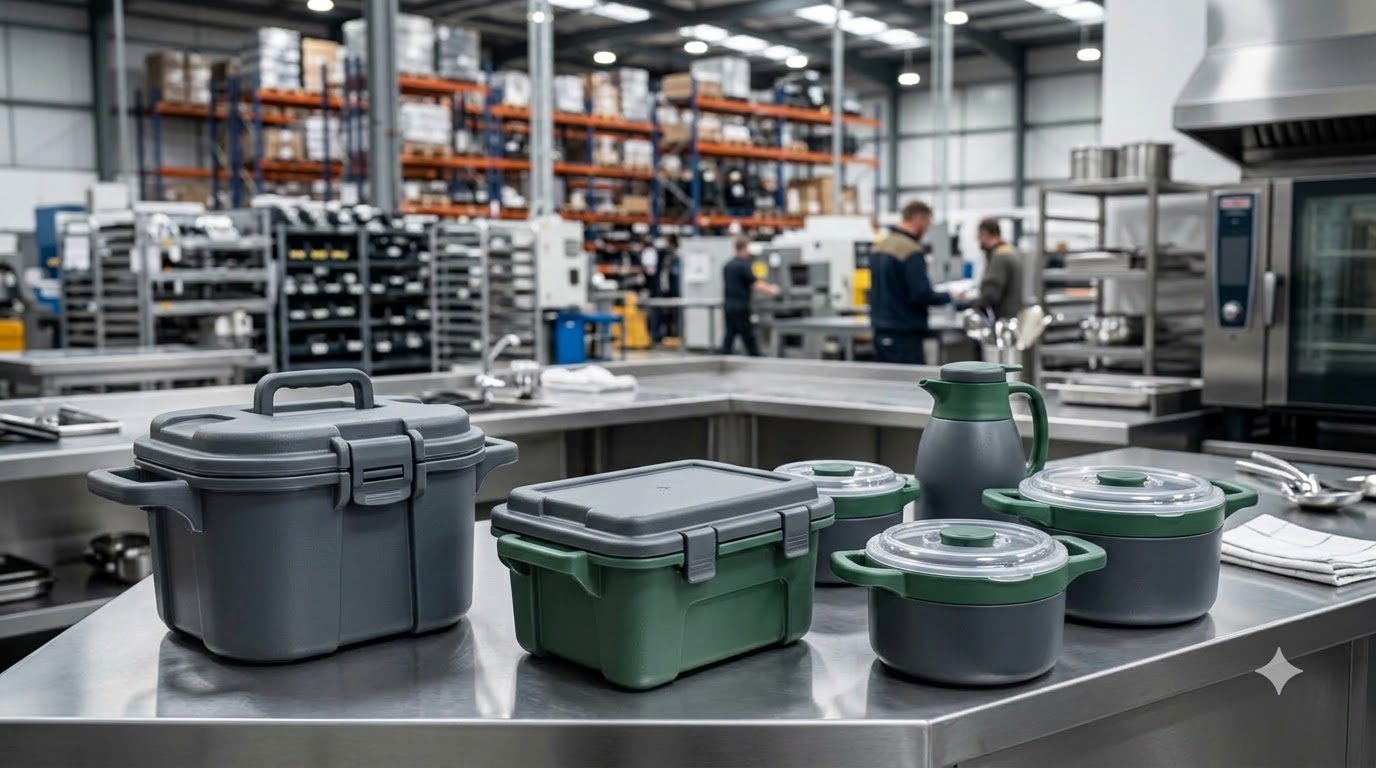
For distributors, wholesalers, retailers, kitchenware brands, private-label businesses, hospitality companies, and international buyers, selecting the right insulated casserole manufacturer in India requires more than comparing prices. Product construction, material quality, insulation performance, capacity, lid design, manufacturing consistency, packaging, MOQ, customization, and delivery capability all influence the commercial value of a bulk purchase.
India has a broad ecosystem of kitchenware, thermoware, plastic household-product and food-storage manufacturers and suppliers. However, suppliers can differ significantly in manufacturing processes, product specifications, quality-control practices, customization capabilities, and order terms.
This guide explains what B2B buyers should evaluate before sourcing insulated casseroles from India and how to compare manufacturers more effectively.
What Is an Insulated Casserole?
An insulated casserole is a food-storage and serving container designed to slow heat transfer between the food inside and the external environment. Unlike a conventional container, it generally incorporates an insulating construction around the food compartment.
Depending on the product design, an insulated casserole may include:
An inner food container
An outer shell
An insulation layer
A fitted lid
Handles or grip areas
A supporting base
Plastic, stainless-steel or combination components
Insulated casseroles are commonly positioned within the thermoware and kitchenware categories and are used for storing and serving cooked food.
For B2B buyers, the term "insulated casserole" alone is not enough to define a product. The actual construction and specification should be confirmed with the manufacturer before purchasing.
Why Are Insulated Casseroles Popular in the B2B Kitchenware Market?
Insulated casseroles combine food storage and serving functionality with thermal insulation. This makes them relevant to several commercial segments.
Retailers
Retailers may sell insulated casseroles as:
Individual kitchenware products
Premium kitchen accessories
Thermoware products
Gift items
Kitchen sets
Wholesalers and Distributors
Wholesalers generally prioritize:
Competitive purchase cost
Consistent quality
Multiple capacities
Reliable supply
Attractive packaging
Repeat-order availability
Private-Label Brands
Private-label businesses may require:
Brand-specific colours
Logo application
Customized packaging
Specific capacities
Product combinations
Consistent production specifications
Hospitality and Institutional Buyers
Hotels, restaurants, catering companies and institutions may evaluate products based on:
Capacity
Durability
Ease of handling
Cleaning requirements
Frequency of use
Product consistency
What Should You Look for in an Insulated Casserole Manufacturer in India?
The best supplier for one buyer may not be the best supplier for another. Manufacturer selection should therefore begin with your product and commercial requirements.
A useful supplier evaluation framework includes:
How Does an Insulated Casserole Manufacturer Produce the Product?
Manufacturing varies according to product design and material combination, but an industrial insulated casserole may involve several stages.
1. Product Design
The design stage determines:
Capacity
Diameter and height
Wall construction
Lid geometry
Handle configuration
Insulation arrangement
External appearance
For mass-market products, design must balance functionality, manufacturability and cost.
For private-label products, the design may also need to accommodate branding and packaging requirements.
2. Tooling Development
Plastic components commonly require mould tooling.
Tooling affects:
Dimensional accuracy
Surface finish
Part consistency
Assembly
Production efficiency
If customized tooling is required, the buyer should clarify tooling costs, ownership and future-use terms before approving production.
3. Component Manufacturing
Depending on the design, manufacturers may use processes such as:
Injection moulding
Metal forming
Cutting
Welding
Polishing
Assembly
The appropriate process depends on the product's construction.
4. Insulation and Assembly
The inner container, insulation system, outer body and lid are assembled according to the approved product design.
The quality of assembly is important because gaps, misalignment or inconsistent components can affect product performance.
5. Quality Inspection
Finished products can be inspected for:
Dimensions
Appearance
Lid fit
Assembly
Structural integrity
Leakage where applicable
Functional performance
Packaging quality
What Materials Are Used in Insulated Casseroles?
Material selection depends on the product's intended market and construction.
Plastic Components
Plastic may be used for the outer body, lid, handles or other components.
Buyers should request information about:
Polymer type
Heat resistance
Food-contact suitability where applicable
Wall thickness
Surface finish
Colour consistency
Dimensional stability
Avoid accepting vague descriptions such as "premium plastic" without a product specification.
Stainless Steel
Stainless steel may be used for inner containers or structural components.
When purchasing stainless-steel products, buyers should confirm the relevant material grade and construction rather than assuming that every stainless-steel casserole uses identical material.
Insulation
The insulation layer is central to the thermal function of the product.
Depending on the design, manufacturers may use different insulation approaches. Buyers should ask suppliers to specify:
Insulation material
Insulation construction
Wall configuration
Performance-testing method
How Should B2B Buyers Evaluate Casserole Quality?
A physical sample should be evaluated before placing a significant bulk order.
Visual Quality
Check for:
Scratches
Cracks
Uneven surfaces
Colour variation
Flash or moulding defects
Misaligned components
Poor finishing
Dimensional Quality
Verify:
Capacity
Height
Diameter
Lid dimensions
Component compatibility
For repeat orders, the approved dimensions should become part of the product specification.
Functional Quality
Depending on the product, evaluate:
Lid fit
Ease of opening and closing
Stability
Handling
Leakage resistance
Thermal performance
Batch Consistency
For distributors and private-label brands, consistency is particularly important.
A supplier should be able to reproduce the approved product specification across subsequent production runs.
How Do You Compare Insulated Casserole Suppliers?
A proper comparison requires a standardized RFQ.
Instead of sending a simple request such as:
"Please send your best casserole price."
provide:
Product type
Capacity
Material
Construction
Colour
Quantity
Packaging
Branding requirements
Delivery location
Required timeline
This ensures that supplier quotations are based on comparable specifications.
Supplier Comparison Example
The lowest quotation should not automatically be treated as the best offer.
What Factors Affect Insulated Casserole Wholesale Price?
There is no universal wholesale price for an insulated casserole.
Pricing can vary according to:
Product capacity
Material
Insulation construction
Design complexity
Component count
Tooling
Order quantity
Customization
Packaging
Branding
Logistics
Quality requirements
For example, a basic plastic casserole and a premium multi-component thermoware product should not be compared solely on per-piece cost.
Total Cost Matters More Than Unit Price
B2B procurement should consider the total landed cost, which can include:
Product cost + packaging + tooling + logistics + applicable duties/taxes + other sourcing costs
A slightly higher unit price can sometimes result in a better commercial outcome if the product has better consistency, packaging or durability.
What MOQ Should You Expect From an Insulated Casserole Manufacturer?
MOQ varies between manufacturers and products.
It may depend on:
Existing catalogue product
Custom design
Colour
Branding
Packaging
Tooling
Production economics
Order volume
For standard products, the MOQ may be different from that of a fully customized private-label product.
Therefore, buyers should ask:
What is the MOQ per SKU?
Is the MOQ different for custom colours?
Is branding subject to a separate MOQ?
Is packaging customization subject to another minimum quantity?
Can multiple capacities be combined into one order?
Do not assume that a supplier's advertised MOQ applies to every product or customization.
Can Insulated Casseroles Be Made for Private Labels?
Private-label sourcing can involve different levels of customization.
Basic Customization
This may include:
Brand logo
Colour
Packaging
Labels
Advanced Customization
Depending on manufacturer capability, a project may involve:
Product shape
Dedicated tooling
Capacity
Component configuration
Packaging architecture
Before starting a customized project, buyers should document:
Approved drawings
Material requirements
Colour specifications
Packaging artwork
Quality standards
Tooling ownership
Approval sample
This helps reduce variation during repeat production.
Packaging Requirements for Bulk Casserole Orders
Packaging should be treated as part of the product specification.
A casserole may be damaged during transportation through:
Impact
Compression
Scratching
Improper stacking
Moisture exposure
Rough handling
B2B buyers should therefore discuss:
Individual packaging
Inner cartons
Master cartons
Protective inserts
Carton dimensions
Product quantity per carton
Shipping marks
Palletization where required
For export orders, packaging should be evaluated against the complete logistics route.
What Quality-Control Checks Should Be Performed?
A buyer can create a simple inspection checklist covering:
Product
Dimensions
Capacity
Weight
Material
Colour
Finish
Function
Lid fit
Opening/closing
Stability
Leakage resistance where applicable
Thermal performance
Construction
Component alignment
Assembly
Insulation construction
Structural integrity
Packaging
Product protection
Carton condition
Labelling
Quantity
For larger procurement programmes, buyers may establish formal acceptance criteria and inspection tolerances before production.
Common Mistakes When Sourcing Insulated Casseroles
1. Choosing the Cheapest Supplier
The lowest quotation may not provide the lowest total cost.
Poor consistency can increase:
Returns
Complaints
Replacement costs
Inventory problems
2. Comparing Different Products
Always compare products with equivalent capacity, materials and construction.
3. Skipping the Sample Stage
A catalogue photograph cannot verify actual product quality.
4. Ignoring Packaging
Transit damage can affect profitability even when factory production quality is good.
5. Not Documenting the Approved Sample
For repeat orders, the approved sample should be linked to a written specification.
6. Failing to Discuss Customization Early
Branding, colour and packaging can affect MOQ, cost and lead time.
How Can International Buyers Source Insulated Casseroles From India?
International buyers should evaluate an Indian supplier using the same core criteria as domestic buyers while adding export-specific considerations.
These can include:
Product documentation
Packaging requirements
Carton dimensions
Shipping configuration
Commercial documentation
Destination-market requirements
Logistics
Import requirements
The buyer should establish the responsibilities of both supplier and importer before confirming the order.
Why Choose Palmline Prive for B2B Kitchenware Sourcing?
Palmline Prive operates within the kitchenware, household-products and thermoware product space. For businesses evaluating suppliers, its relevant product categories can be considered alongside other manufacturers based on the buyer's specific product requirements.
Before placing an order, buyers should confirm the exact:
Product specification
Available designs
Material construction
MOQ
Customization options
Packaging
Lead time
Commercial terms
This specification-first approach helps ensure that supplier selection is based on actual procurement requirements rather than unsupported assumptions.
Conclusion
Choosing among insulated casserole manufacturers in India requires a complete B2B evaluation rather than a simple price comparison. Product construction, materials, insulation, capacity, lid design, manufacturing consistency, quality control, packaging, MOQ and lead time all contribute to the commercial value of the product.
The most effective procurement process begins with a clear specification, followed by supplier comparison, physical sampling, quality evaluation and documented approval.
For businesses sourcing kitchenware, thermoware or insulated casserole products, Palmline Prive can be included in the supplier evaluation process based on the exact product and commercial requirements.
Frequently Asked Questions
What should I look for in insulated casserole manufacturers in India?
Evaluate manufacturing capability, product construction, materials, insulation, quality control, MOQ, customization, packaging, lead time and repeat-order consistency.
How do I compare insulated casserole suppliers?
Give each supplier the same product specification and compare material, capacity, construction, sample quality, MOQ, packaging, lead time and commercial terms.
Can I order insulated casseroles in bulk from India?
Yes, insulated casseroles are available through Indian manufacturers and suppliers for wholesale and bulk procurement. The appropriate MOQ depends on the product and supplier.
Can an insulated casserole manufacturer provide private-label products?
Private-label possibilities depend on the manufacturer's capabilities, product type and order volume. Branding, colours, packaging and potentially product design can form part of a private-label programme.
What affects the wholesale price of insulated casseroles?
Capacity, material, insulation, design, order volume, customization, tooling, packaging and logistics can all influence wholesale pricing.
How important is the casserole lid?
Very important. Lid fit and construction can influence usability, leakage resistance and heat retention.
Should I request samples before a bulk order?
Yes. A production-representative sample should ideally be evaluated before committing to a significant order.
What packaging should I specify for bulk orders?
Specify individual protection, inner and master cartons, carton strength, quantity per carton, labelling and shipping configuration according to your distribution requirements.
 Start Chat